 English
- Home
- About Company
- Our Services
- Drilling & Tapping Job Works
- Sliding Head Machining Works
- CNC & VMC Machining Work
- Switchgear Machining Parts
- Textile Machinery Parts
- Aluminum Component
- Automobile Parts
- Flange & Shaft Manufacturing
- Jig & Fixture
- Electric Connector Parts
- Oil & Gas Field Valve Parts
- Sliding Head Machine
- Industrial Heavy Machining & Fabrication Job Works
- Tube Sheet Drilling Services
- Brochure
- Our Machineries
- Gallery
- Contact US
Oil & Gas Field Valve Parts
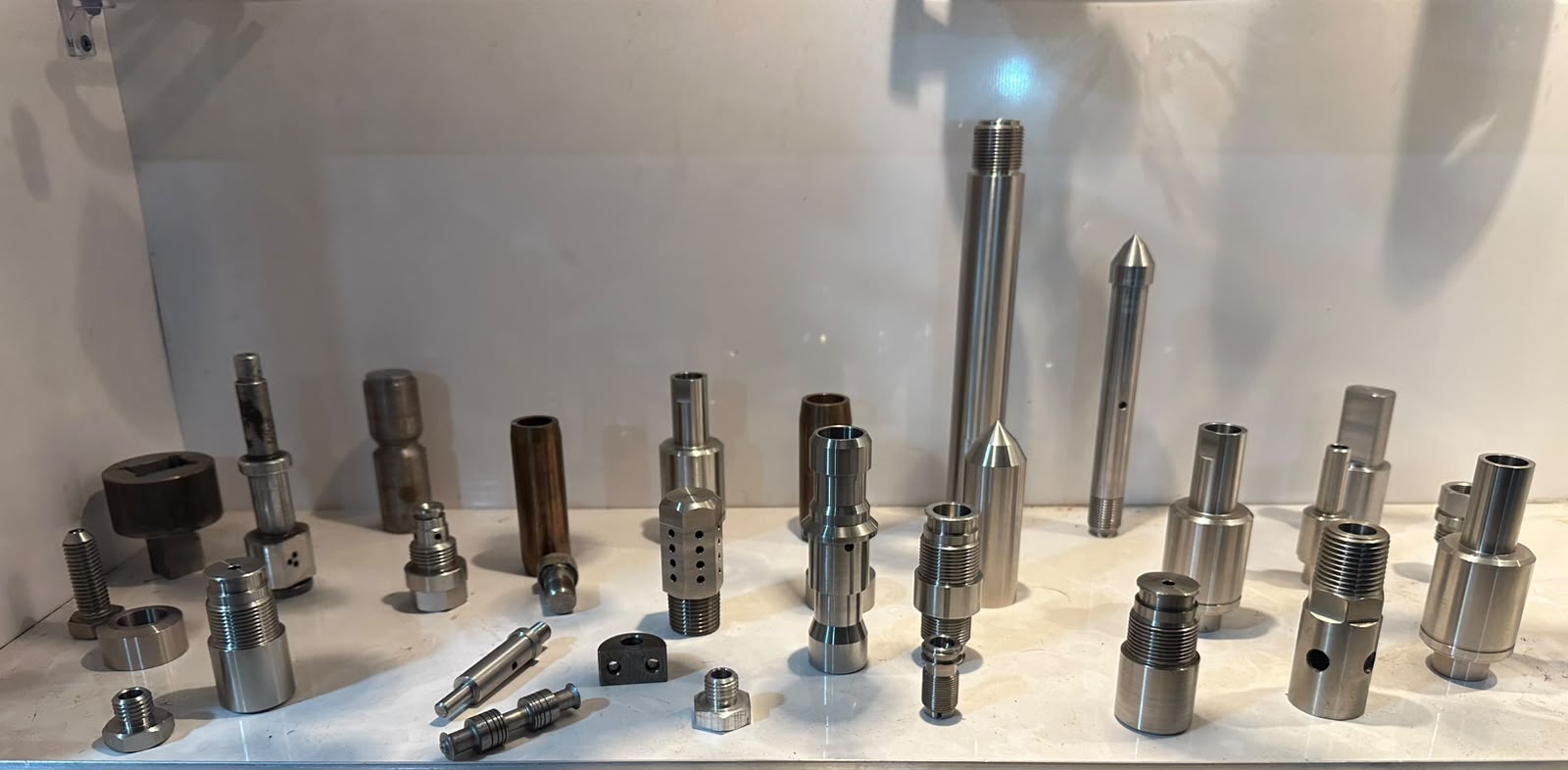
Oil and gas field valve parts include the valve body (cast or forged steel), bonnet, gate/ball, seat, stem, and actuator. These critical wellhead and pipeline components endure extreme pressures, vibrations, and temperatures. Repair kits and replacement seals are often needed to maintain high-pressure wellhead operations.
Key Valve Components
Wellhead and process valves consist of several vital wet and mechanical parts engineered to handle high pressures.
- Valve Body: The main casing that contains the fluid, typically made of forged or cast steel.
- Bonnet: The cover on the body that houses internal components and provides a pressure-tight closure.
- Trim: The collective term for the internal wetted parts of a valve, including the disc (or gate/ball), seat, and stem.
- Seat: Provides the primary shut-off seal against the gate or ball. Can be metal-to-metal or soft-seated.
- Actuator: The mechanism (pneumatic, hydraulic, or electric) used to remotely open, close, or throttle the valve.
- Packing: A seal material (like graphite or PTFE) compressed around the stem to prevent leaks while allowing movement.
Common Oil & Gas Valve Types
Depending on the operation (e.g., isolation, regulation, or preventing backflow), different valve configurations are used:
- Gate Valves: Used to start or stop flow with minimum flow restriction. They operate by lifting a rectangular gate out of the fluid path.
- Ball Valves: Feature a bored, spherical ball to control flow. Ideal for fast shut-off and high-pressure liquid or gas pipelines.
- Globe Valves: Used for cooling systems and process lines where exact flow regulation and throttling is required.
- Check Valves: Automated safety valves that prevent reverse flow to protect pumps and equipment.
- Choke Valves: Specialized valves used at the wellhead to precisely reduce and control production pressure.